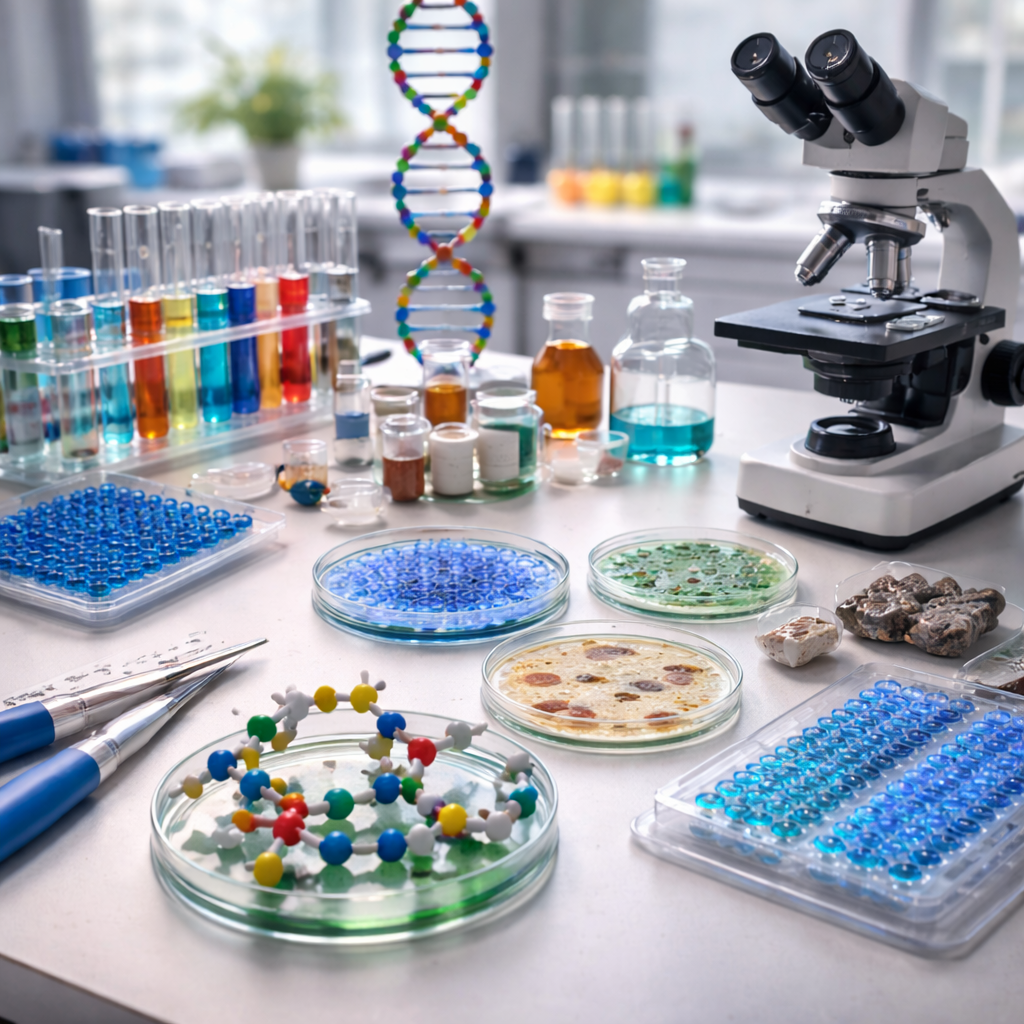
Molecular Biology, within the Specialized Fields of Biological Sciences, is the discipline devoted to understanding the molecular mechanisms that underlie cellular structure, function, regulation, and heredity. It focuses on the interactions among nucleic acids, proteins, and other biomolecules that drive processes such as DNA replication, transcription, translation, gene regulation, signal transduction, and macromolecular assembly. Central themes include molecular genetics, enzyme function, regulatory networks, chromatin dynamics, RNA biology, and the molecular basis of development and disease. Methodologies such as recombinant DNA technology, PCR, sequencing, CRISPR-mediated editing, structural biology, and high-throughput omics platforms enable precise analysis of molecular processes across diverse organisms. Molecular Biology provides the foundational framework for biotechnology, genetics, medicine, microbiology, and numerous applied sciences by elucidating the biochemical rules that govern life at its most fundamental level.
Within the methodological architecture of the Quantum Dictionary, Molecular Biology represents a domain in which terminology is highly contextual, shaped by biochemical pathway, regulatory framework, experimental technique, and biological system. Terms such as “expression,” “regulation,” “binding,” “signal,” or “domain” collapse into distinct semantic states when applied in gene-regulatory analysis, protein–protein interaction studies, structural modeling, cellular signaling, or genome-editing contexts. Further variability arises from differences in organismal models, molecular technologies, and interpretive frameworks that distinguish classical molecular biology from contemporary integrative approaches such as systems biology and synthetic biology. The quantum-semantic architecture encodes each molecular term as a contextual semantic entity whose meaning resolves according to methodological orientation, molecular scale, physiological condition, or interpretive paradigm. This ensures semantic interoperability with adjacent fields—including genetics, cell biology, microbiology, biochemistry, and biotechnology—while preserving the definitional precision required for research, clinical translation, and technological innovation. By modeling the dynamic interplay among molecular interactions, regulatory networks, evolutionary forces, and analytical methodologies, the Quantum Dictionary provides a coherent and adaptive lexicon aligned with the complexity, depth, and continual advancement of Molecular Biology.